Original translator & photos
DAVE
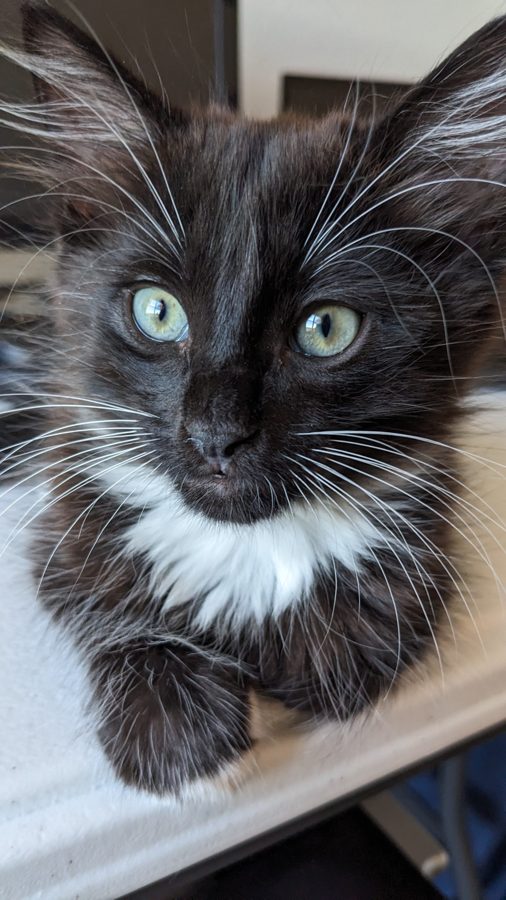
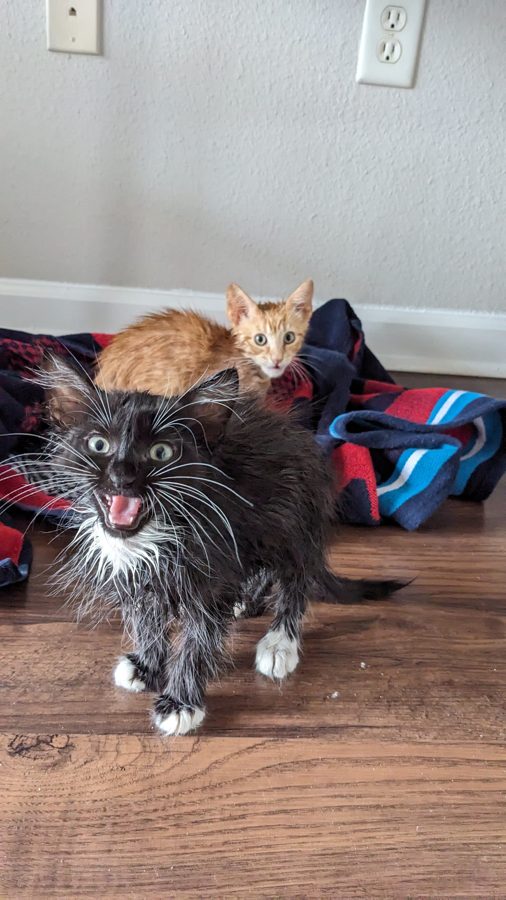
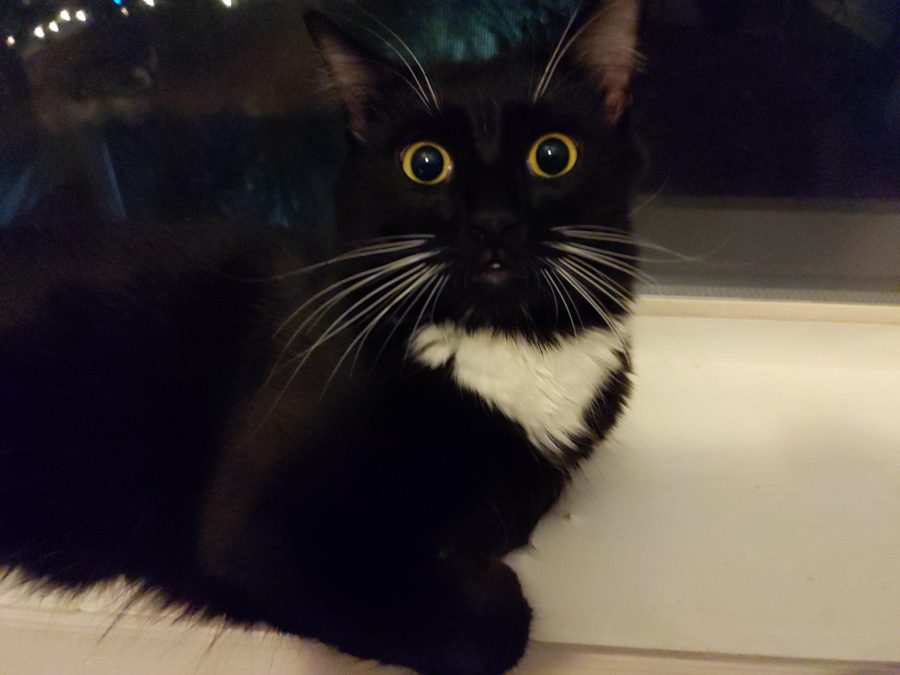
Nobody can translate cat. What this page does is measure the meow and infer an intent from acoustic features that published studies found correlate with context. The words are personality — his, and by extension, ours.
What it measures
- Fundamental frequency (pitch) by normalized autocorrelation on 43 ms windows, with parabolic peak refinement. Adult cat meows sit around 400–800 Hz; a male human voice around 85–180 Hz. That gap is what lets "Everyone at once" tell you two apart.
- Contour — whether the pitch rises or falls from the first third of the meow to the last. Lund University's Meowsic project (Schötz et al.) found rising melodies cluster in friendly, attention-seeking contexts and falling ones in stressed or complaining contexts.
- Duration, loudness, harmonicity and jitter. Long and loud reads as demand; short and clean as greeting; rough and low as complaint. Nicastro & Owren (2003) showed humans can classify meows by context above chance from features like these, so the heuristics aren't nothing — but they aren't a dictionary either.
- What it can't hear: a purr sits around 25 Hz, which is barely one cycle inside a 43 ms window, so purrs register as quiet noise and are ignored. He'll have to purr at you in person.
How it meows back
A sawtooth source at a cat-range pitch runs through three sweeping band-pass "formant" filters that shape the m → ee → ow of a meow. Your sentiment sets the pitch glide, length, roughness and whether he purrs or trills. Cats do react to synthesized meows at natural pitch — mostly by looking for the other cat.
Privacy for the original translator
Audio analysis and meow synthesis run entirely in this tab. Transcription of your voice uses the browser's built-in speech engine (on Chrome that engine sends audio to Google's speech service — no keys, nothing stored by this page). If that engine isn't available you get a text box instead. The conversation lives in this device's local storage only.